
Growing up, I would always hear such phrases like, “I’m a visual learner”, “I learn best through writing”, or “I’m very good with hearing”, which led me to believe that perhaps people really have preferred styles towards learning.
If I were asked what kind of learner I am, I would probably say that I am a visual learner. I enjoy reading books with pictures, or else I would be a little slow in getting through the pages. I understand scientific concepts better with diagrams. I also explain things more efficiently through graphic organizers and mind maps.
But with that being said, I did not really question the scientific basis behind learning styles towards learning. I just believed that it is innate to us that we have our own tailored learning styles.
Having been curious in the past few days, it really shocked me on finding out the pieces of scientific literature about learning styles toward learning.

This inquiry aims to investigate the effectiveness of the idea of learning styles toward performance in learning. The concept of learning styles is explained alongside the well-known frameworks. Then, the studies that support the success of learning styles are also discussed. On the other hand, the counterpoints to the notion of learning styles are investigated to see whether or not how significant it really is toward the progress of learning.
First and foremost, what are learning styles? The concept “learning styles” refers to the idea that individuals differ in regard to what mode of instruction or study is most effective for them. Proponents of learning-style assessment describe that the optimal mode of instruction requires diagnosing individuals’ learning styles and tailoring instruction accordingly (Pashler et al., 2009).


Neil D. Fleming is a teacher at the secondary level, teacher education, and in university (Lincoln University, New Zealand). He has 9 years of experience of being a senior inspector for over 100 high schools on the South Island of New Zealand. This involved being a critical observer of over 9000 “lessons” in classrooms (Fleming and Baume, 2006).
Colleen E. Mills is a New Zealand management academic specializing in communication. She is currently a professor of management at the University of Canterbury.
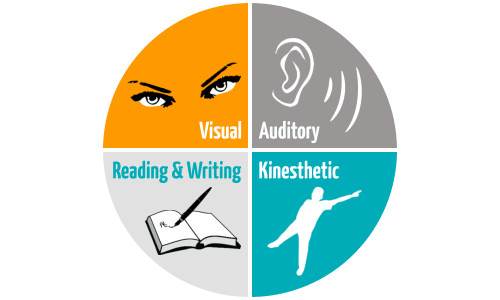
There are many different frameworks aiming to describe learning styles, some of which are Kolb’s Theory of Learning Styles and the VAK model. But Neil Fleming and Colleen Mills’s VARK (Visual, Aural, Read/Write, Kinesthetic) model is one of the most prominent. It was introduced as an inventory in 1987 that was designed to help students, educators, and others learn more about their individual learning preferences.
According to the VARK model, learners are classified depending on these types of preferences (Fleming and Mills, 1992). Visual learning (pictures, movies, diagrams), Auditory learning (music, discussion, lectures), Reading and writing (making lists, reading textbooks, taking notes), and Kinesthetic learning (movement, experiments, hands-on activities).

Regardless of learning styles’ point of origin, their concept has become ingrained in popular culture. This is very evident in several data.
Wellcome Trust is a politically and financially independent global charitable foundation aiming to grant funding, and promote advocacy campaigns and partnerships to find solutions for today’s urgent health challenges. Its founder, Sir Henry Wellcome, was a pharmaceutical entrepreneur. Based on his will, in which he left his wealth and his collection of historical medical items, to improve health through research.
In their 2013 study, it was claimed that 76% of teachers in the United Kingdom used learning styles in their teaching (Wellcome Trust, 2013).
In 2014, another research found that over 90% of teachers in five countries (the United Kingdom, the Netherlands, Turkey, Greece, and China) believed individuals learn better when receiving information in accordance with their preferred style (Willingham et al., 2015).

Despite the popularity and widespread acceptance of learning styles, scientific evidence suggests that people may not be classified as one kind of learner or another.
Dr. Harold Pashler is a distinguished professor of Psychology and a faculty member of the Cognitive Science Program at the University of San Diego in California, USA. His main areas of interest are human learning and the psychology of attention. Pashler’s learning
research focuses on methods for optimizing the acquisition and retention of knowledge and skills
According to a 2008 study, Dr. Pashler and his research team found that there was “virtually no evidence for” learning styles. After investigating numerous studies testing the validity of learning styles toward learning, there were actually few in number that used sound methodology to actually test it. Furthermore, of those that did use appropriate methods, several were found to contradict the presupposed effectivity of learning styles toward education (Pashler et al., 2008).
Based on another research published in 2017, the British Journal of Psychology found out that the students when tested on their preferred learning style (visually or verbally), resulted just them liking the words or pictures better, not that the words or pictures worked better for their memories (Knoll et al., 2017).
Then, in a 2019 publication, Polly Hussman and her team tested 426 anatomy students to take a studies strategies survey and a VARK questionnaire. They monitored the students’ study habits and course outcomes. Results showed that the majority of students did not have a correlation between their strategies and their VARK assessment. The performance of students in anatomy did not correlate with their VARK scores, rather it was the study strategies that positively correlated with the final class grade. The alignment of the study strategies with the VARK assessment had no correlation with anatomy course results. All in all, the study presents evidence that learning styles did not increase academic performance (Husmann and O’Loughlin, 2019)
With data suggesting that learning styles may not be indicative of better learning, then how should one approach it?

Daniel T. Willingham earned his B.A. from Duke University in 1983 and his Ph.D. in Cognitive Psychology from Harvard University in 1990. He is currently a Professor of Psychology at the University of Virginia since 1992. Until about 2000, his research focused solely on the brain basis of learning and memory. Today, all of his research concerns the application of cognitive psychology to K-16 education.
Willingham explains in a 2018 interview from the Atlantic that people should stop constricting themselves as visual, verbal, or some kind of other learners. He also stated that there are no positive or negative effects in categorizing oneself into these learning styles. He then emphasized that everyone is capable of thinking in words or in mental images, plus each has their own personal skillsets on how to think and decide what is the best one for them in a given situation.
Furthermore, on his website, he claimed that learning theories really seek to categorize kids. Once people are classified as visualizers and or verbalizers, this becomes the basis to inform instruction. He then emphasized that scientists can’t help teachers in this way. There haven’t been developed categories that have proven meaningful for instruction. He also added that one does not have to believe in learning styles theories to appreciate differences among kids. To hold an open-minded attitude in understanding the differences of each student, and to try to develop such attitudes within them (Willingham, n.d.).
As for several scientifically-backed techniques that learners can use in their studies as opposed to learning styles, Dunlosky and his team published their findings in a 2013 study.
Ten techniques were tested upon students in terms of their learning conditions, student characteristics, materials, and criterion tasks. Practice testing and distributed practice received a “high utility assessment” while Elaborative interrogation, self-explanation, and interleaved practice scored “moderate utility assessments”. The other five techniques, summarization, highlighting, the keyword mnemonic, imagery use for text learning, and rereading, received “low utility assessments”. (Dunlosky et al., 2013).

So going back to my initial perspective, am I a visual learner? Perhaps not, after reading the scientific literature regarding the topic. I also realized that despite believing in myself that I am a visual learner, I did not take into consideration the other abilities I was utilizing to accompany my visual capability in accomplishing different tasks.
Moving forward, as a student and an inspiring educator, I will now stop limiting myself to being constricted in such categories. I will be free to greatly utilize the different capabilities of the human body to learn topics and teach others. This time it will be multiple perspectives toward learning, not just mainly focused on visual, kinesthetic, or other types, but a combination of all of them. Besides, would it be better for someone to learn a lesson poorly using a single style, rather than excelling in a topic with the help of all sorts of methods?
References
Dunlosky, J., Rawson, K. A., Marsh, E. J., Nathan, M. J., & Willingham, D. T. (2013). Improving Students’ Learning With Effective Learning Techniques: Promising Directions From Cognitive and Educational Psychology. Psychological Science in the Public Interest, 14(1), 4–58. https://doi.org/10.1177/1529100612453266
Fleming, Neil & Mills, Colleen. (1992). Not Another Inventory, Rather a Catalyst for Reflection. To improve the academy. 11. 10.1002/j.2334-4822.1992.tb00213.x.
Fleming, N., & Baume, D. (2006). Learning Styles Again: VARKing up the Right Tree! Educational Developments, 7, 4-7. http://www.johnsilverio.com/EDUI6702/Fleming_VARK_learningstyles.pdf
Husmann, P.R. and O’Loughlin, V.D. (2019), Another Nail in the Coffin for Learning Styles? Disparities among Undergraduate Anatomy Students’ Study Strategies, Class Performance, and Reported VARK Learning Styles. American Association of Anatomists, 12: 6-19. https://doi.org/10.1002/ase.1777
Khazan, O. (2021, June 21). Are ‘Learning Styles’ Real? The Atlantic. https://www.theatlantic.com/science/archive/2018/04/the-myth-of-learning-styles/557687/
Knoll, A. R., Otani, H., Skeel, R. L., & Van Horn, K. R. (2017). Learning style, judgements of learning, and learning of verbal and visual information. British journal of psychology (London, England : 1953), 108(3), 544–563. https://doi.org/10.1111/bjop.12214
Pashler, H., McDaniel, M., Rohrer, D., & Bjork, R. (2008). Learning Styles: Concepts and Evidence. Psychological Science in the Public Interest, 9(3), 105–119. https://doi.org/10.1111/j.1539-6053.2009.01038.x
Willingham, D. (n.d.). Daniel Willingham’s Learning Styles FAQ. Daniel Willingham–Science & Education. http://www.danielwillingham.com/learning-styles-faq.html
Willingham, D. T., Hughes, E. M., & Dobolyi, D. G. (2015). The Scientific Status of Learning Styles Theories. Teaching of Psychology, 42(3), 266–271. https://doi.org/10.1177/0098628315589505
An Inquiry Project for English 13
Submitted to: Ma’am Anne Arellano
Submitted by: David Andrei A. Mendoza, Eng 13 WFU1

